
Categories
Uncategorized

Pet Loss Grief: What You’re Feeling Is Normal (And You’re Not Alone)

Pet Loss Grief: What You’re Feeling Is Normal (And You’re Not Alone)

By Fudge 🐾 – Cherished Companion’s resident blogger, biscuit enthusiast and four-legged family member.

Hello everyone, it’s Fudge here 🐾

This week, I want to talk about something a little different. Something that my humans at Cherished Companion see almost every day, and something that I wish more people felt comfortable talking about.

Grief.

Not just any grief, but the heartbreak that comes with losing a much-loved pet.

You see, to us animals, our humans are our whole world. And I like to think we’re a pretty big part of yours, too.

We’re there for the morning cup of tea, the walks in the rain, the evenings on the sofa and those quiet moments when nobody else quite understands how you’re feeling.

So when we’re no longer there, it’s not simply the loss of a pet.

It’s the loss of a companion, a routine, a source of comfort and a little piece of everyday life.

And if you’re struggling with that loss, there’s something I really want you to know.

What you’re feeling is normal. And you don’t have to face it alone.

Why Does Losing a Pet Hurt So Much?

One of the things my humans hear from families is how surprised they are by the intensity of their grief.

Some say they didn’t expect to feel so devastated. Others worry that they’re grieving more deeply than they did when they lost a person.

But the bond between humans and animals is something quite extraordinary.

Your dog might have been the reason you got out of bed on difficult mornings. Your cat might have been the one who curled up beside you every evening. Your rabbit, horse or other companion might have been part of your family for many years.

Pets offer companionship, affection, routine and a sense of purpose.

And unlike many human relationships, that bond often comes without judgement or expectation.

When they’re gone, the silence can feel overwhelming.

The empty bed. The untouched food bowl. The lead hanging by the door. The instinct to call their name before remembering they’re no longer there.

These little moments can be some of the hardest.

Pet loss grief is real grief, and it deserves to be recognised.

Grieving a Dog: When Your Everyday Companion Is Gone

For many families, grieving a dog means adjusting to an entirely different daily routine.

Dogs have a wonderful way of becoming involved in almost everything we do.

They’re our walking partners, our welcoming committee when we come home and, quite often, our shadows around the house.

When they’re gone, you may find yourself struggling with things that once seemed ordinary.

Perhaps you avoid your usual walking route because it reminds you of them. Maybe you still listen for their paws on the floor or expect to see them waiting at the window.

You might even feel guilty when you enjoy yourself or laugh at something.

These reactions are understandable.

There is no timetable for when you should stop missing your dog, and there is no requirement to put their belongings away before you feel ready.

Some people find comfort in keeping a collar, photograph or paw print nearby. Others need time before they can look at those reminders.

Both are perfectly valid.

Grieving a Cat: Missing the Quietest Member of the Family

Cats often have their own special ways of showing affection.

Perhaps yours followed you from room to room, slept at the bottom of your bed or insisted on sitting on your laptop whenever you tried to work.

Maybe they weren’t particularly cuddly, but they were always there, quietly keeping you company.

When a cat dies, the absence can feel especially noticeable in those peaceful moments at home.

You may miss the sound of purring, the familiar meow at feeding time or the comforting weight of them curled up beside you.

For people grieving a cat, it’s important to remember that the strength of your grief isn’t measured by how affectionate or independent your cat was.

It’s measured by the relationship you shared.

And that relationship was uniquely yours.

The Different Emotions You Might Experience After Pet Loss

Grief doesn’t always look the way we expect it to.

Some people cry immediately. Others feel numb or strangely calm at first. Some struggle to sleep, lose their appetite or find it difficult to concentrate.

You might experience:

  • Sadness: Missing your pet and the life you shared.
  • Guilt: Wondering whether you made the right decisions about their care.
  • Anger: Feeling frustrated that they became ill or that you couldn’t do more.
  • Loneliness: Struggling with the quietness of your home.
  • Relief: Particularly if your pet had been suffering or needed intensive care.
  • Unexpected happiness: Smiling at a memory, followed by feeling guilty for smiling.

You might experience several of these emotions in a single day.

And here’s something important: feeling relief that your pet is no longer suffering doesn’t mean you loved them any less.

It means you cared deeply about their comfort.

Grief isn’t a straight line. There will be better days, difficult days and moments when a familiar sound, photograph or smell brings everything flooding back.

Coping With Pet Loss: Small Things That May Help

There’s no magic solution for heartbreak, and I certainly wouldn’t pretend there is.

But there are gentle ways to support yourself while you’re grieving.

  1. Allow yourself to grieve

You don’t need to apologise for being upset or explain why losing your pet has affected you so deeply.

Love doesn’t become less meaningful because it was shared with an animal.

  1. Talk about your pet

Share their name. Tell their stories. Remember the funny things they did.

Sometimes talking about the little habits that made your companion special can bring comfort.

And if you need to cry while doing it, that’s okay too.

  1. Create a special place for their memories

Some families choose a photograph, memorial frame, paw print, fur clipping or a special place in the garden.

Others keep their pet’s ashes close in an urn or piece of memorial jewellery.

There’s no right or wrong way to remember someone you love.

The important thing is choosing something meaningful to you.

  1. Take care of yourself

Grief can be exhausting.

Try to maintain some everyday routines, eat regularly, get outside when you can and accept support from people who understand.

You don’t need to rush yourself into feeling better.

  1. Find people who understand pet bereavement

Not everyone understands the depth of the bond we share with our pets.

If someone tells you it was “only a dog” or “just a cat”, that can make an already painful experience feel even lonelier.

Try talking to people who recognise that your pet was a member of your family.

And if your grief is making everyday life particularly difficult, speaking with your GP or a bereavement counsellor can be helpful.

The Guilt That Sometimes Comes With Saying Goodbye

There’s one particular part of pet loss grief that my humans encounter regularly.

Families who have had to make the heartbreaking decision to have their pet put to sleep sometimes question themselves afterwards.

Did I do it too soon?

Should I have waited another day?

Could I have done something differently?

These questions can be incredibly painful.

But choosing euthanasia following veterinary advice, when a pet’s quality of life has deteriorated, can be one of the most compassionate decisions a family makes.

It isn’t about giving up.

It’s about considering their comfort, dignity and wellbeing when they can no longer tell us how they’re feeling.

If you’re struggling with guilt, it may help to talk through the decision with your vet, who can explain the medical reasons behind their advice.

Remember that the decision was made with the knowledge and circumstances you had at the time.

Try to offer yourself the same kindness you would offer a friend.

Helping Children Understand the Loss of a Pet

For many children, losing a pet is their first experience of death.

Their grief may look different from an adult’s.

Some will cry. Others will ask lots of questions, become quieter than usual or return to playing shortly afterwards.

It’s helpful to use gentle, clear and age-appropriate language.

You can encourage children to talk about their pet, draw pictures, create a memory box or choose a favourite photograph.

Try not to feel that you need to hide all your own sadness. Seeing adults express grief in a healthy way can help children understand that missing someone is a natural part of loving them.

And importantly, reassure them that their feelings are welcome, whatever those feelings might be.

When Should You Consider Getting Another Pet?

This is another question families often ask.

And the answer is simple: when it feels right for you.

Some people find comfort in welcoming another animal into their lives relatively soon.

Others need months or years before they feel ready.

And some decide they don’t want another pet at all.

None of these choices means you loved your previous companion any more or less.

A new pet doesn’t replace the one you’ve lost.

They simply become another chapter in your story.

Pet Bereavement Support: You Don’t Have to Face This Alone

At Cherished Companion, we’re privileged to care for pets and their families during some of their most difficult moments.

We’ve sat with people as they’ve shared stories about their companions. We’ve heard about the mischievous puppies, the cats who ruled the household and the animals who helped their humans through life’s hardest times.

And we’ve seen just how deeply those bonds run.

While our role includes individual pet cremation and end-of-life care, we believe supporting families goes beyond the practical arrangements.

Sometimes people simply need someone who understands why they’re upset.

Someone who won’t rush them, dismiss their feelings or tell them it’s time to move on.

For additional support, the Blue Cross Pet Loss Support service offers a listening service for people grieving the loss of an animal.

You can find further information at www.bluecross.org.uk/pet-bereavement-and-pet-loss.

A Final Thought From Fudge 🐾

If you’ve recently lost a beloved pet, I want to leave you with one thought.

You might not hear their paws coming down the hallway anymore. Their favourite spot might be empty, and your daily routine may feel completely different.

But the love you shared doesn’t simply disappear.

It’s there in the photographs, the stories, the funny memories and all those little moments that made your pet uniquely yours.

You don’t have to stop missing them.

You don’t have to stop talking about them.

And you certainly don’t have to feel embarrassed about how much you loved them.

Because they were never “just a pet”. They were family.

With love,

Fudge 🐾

Cherished Companion – Compassionate individual pet cremation, end-of-life guidance and pet bereavement support for families across Glossop, Tameside, the High Peak and surrounding areas.


Categories
Uncategorized

How to Choose a Pet Crematorium: 10 Important Questions Every Pet Owner Should Ask

How to Choose a Pet Cremation Provider: 10 Important Questions to Ask

Choosing a trusted pet crematorium, understanding your options and making sure your beloved companion receives the care they deserve.

By Fudge 🐾

Official Cherished Companion Blogger.
Unofficial Office Manager.
Chief Investigator of Important Matters (and Missing Biscuits).

Hello, it’s Fudge 🐾

Last week, I was doing a little investigating into the differences between corporate and independent pet cremation. And goodness me, there was quite a lot to talk about!

This week, I thought we’d take things one step further.

Because now that you know you have a choice when it comes to pet cremation, how do you actually decide who to trust?

After all, choosing someone to look after your beloved companion is a pretty big responsibility.

You’ve spent years loving them, feeding them, walking them, spoiling them and, in my case, probably letting them steal most of the sofa.

So when the time comes to say goodbye, surely you want to know they’re going to be treated with the same love and respect they’ve always known?

That’s why this week’s blog is all about how to choose a pet crematorium, with 10 important questions Mum & Dad think every family should ask.

And the best bit?

You don’t have to wait until your pet has passed away to ask them.

  1. Will my pet be cremated individually?

This is probably one of the most important questions.

There are two main types of pet cremation: individual and communal.

With individual pet cremation, your pet is cremated separately, allowing their own ashes to be collected and returned to you.

With communal pet cremation, several pets are cremated together, meaning individual ashes cannot be returned.

Neither option is necessarily right or wrong. It’s about what feels right for your family.

But if you want your own pet’s ashes returned, make sure you’re choosing an individual cremation.

Here at Cherished Companion, Mum & Dad only provide individual pet cremation. Every pet receives their own cremation, whether their family wants their ashes returned or chooses to have them scattered on our peaceful grounds.

  1. Where will my pet be taken?

Now, this is something many families simply don’t think to ask.

When you leave your pet at the vets, they may be collected by an external cremation company and transported to a central facility.

Depending on the provider, that could be quite some distance away.

Some crematoriums operate from industrial or commercial premises, while others are smaller, independent businesses.

When you leave your pet at the vets, they may be collected by an external cremation company and transported to a central facility.

With some larger pet cremation providers, collections are made on scheduled routes, sometimes weekly. This can mean your beloved companion remains in refrigerated storage at the veterinary practice until collection day.

When collection takes place, your pet may then be transported in a transit van alongside other pets collected from different veterinary practices, before arriving at a larger crematorium, sometimes many miles away.

Not every crematorium operates this way, but it’s something many families simply aren’t aware of.

And that’s why Mum & Dad believe it’s so important to ask where your pet will be kept, how they’ll be transported, and how long it will be before their individual cremation takes place.

At Cherished Companion, we’re a little different.

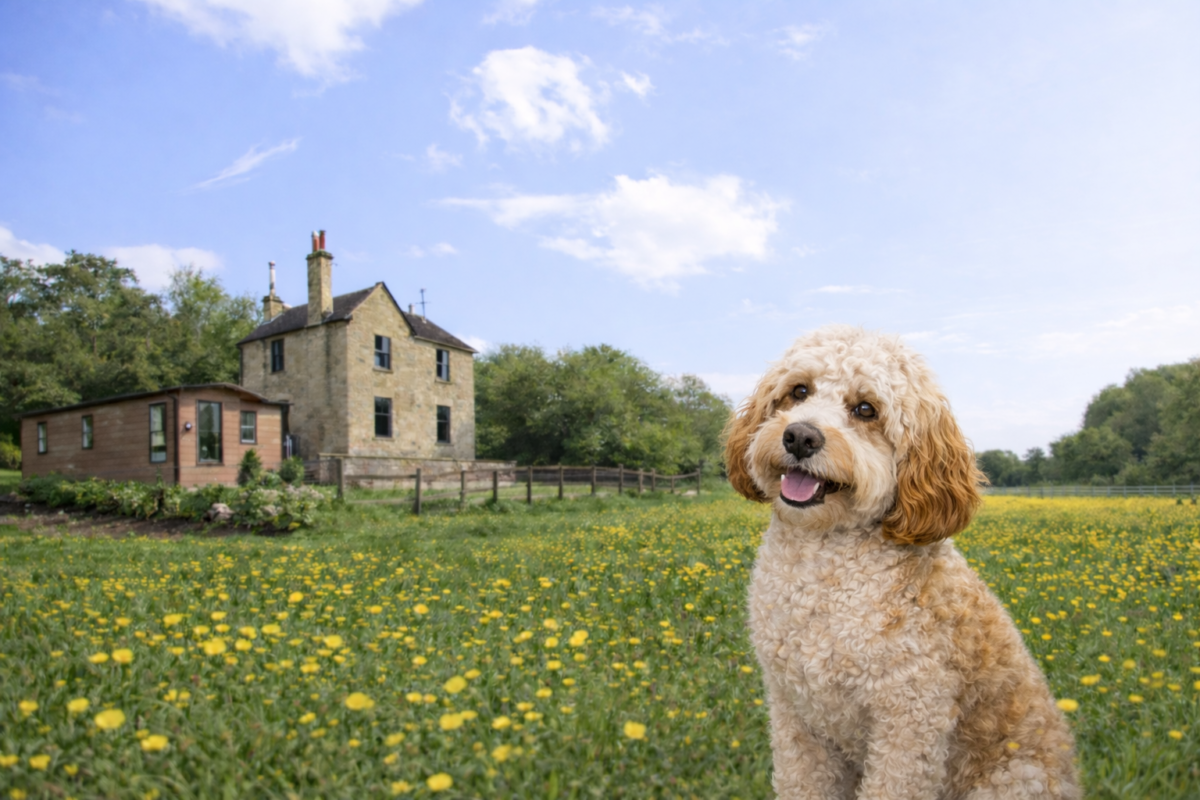
Your pet comes to our family home on our smallholding in Glossop, surrounded by peaceful countryside.

They’re not being transferred to another crematorium elsewhere. They remain here, on-site, throughout their time in our care.

And knowing exactly where their beloved companion is can bring families enormous reassurance.

  1. How will my pet be cared for before cremation?

This one is particularly close to Mum & Dad’s hearts.

Different cremation providers have different procedures for collection, storage and handling.

Some veterinary practices use refrigerated storage until pets are collected. Some providers arrange regular collection rounds.

These arrangements can be perfectly appropriate, but families deserve to understand them.

At Cherished Companion, Mum & Dad aim to collect pets promptly, often directly from their home or veterinary practice.

They’re gently placed into comfortable baskets, with their own blankets where appropriate, and remain in their baskets until their individual cremation.

Because while a pet can no longer experience discomfort after death, Mum & Dad firmly believe dignity, gentleness and respect should never stop mattering.

And I couldn’t agree more.

  1. Who will actually be looking after my pet?

Here’s something worth thinking about.

When you arrange pet cremation, do you know who will collect your pet? Who will carry out their cremation? Or who will prepare their ashes and keepsakes?

With larger organisations, several different people may be involved throughout the process.

At Cherished Companion, it’s much more personal.

Paul is often the person who collects your pet, brings them back into our care, carries out their individual cremation and prepares their keepsakes.

Ruth is usually the person speaking to families, explaining the options and helping make arrangements.

So you’re not simply dealing with a booking reference.

You’re dealing directly with the family responsible for caring for your pet.

(And occasionally you may hear me providing very important background barking.)

  1. How soon will my pet be collected?

When a pet passes away, particularly at home, families often want help as soon as possible.

The thought of waiting for several hours, or longer, can be incredibly distressing.

So it’s worth asking whether the crematorium offers prompt collection or operates scheduled collection services.

At Cherished Companion, Mum & Dad can usually arrange collection quickly, depending on location and availability.

We collect from homes and veterinary practices across Glossop, Tameside, Saddleworth, the High Peak and surrounding areas.
And if your pet is nearing the end of life, you can contact us beforehand to discuss arrangements.

Because sometimes having a plan in place makes an incredibly difficult day just a little easier.

  1. How long will it take for my pet’s ashes to come home?

Oh, this is an important one.

For many families, having their pet’s ashes returned feels like bringing a little piece of them home.

And waiting can be hard.

Different crematoriums have different timescales, depending on their collection arrangements, workload and how ashes are returned.

At Cherished Companion, we aim to have ashes ready within 24–48 hours in most cases.

Families can collect them personally or arrange for Mum & Dad to deliver them home.

We know nothing can take away the heartbreak of losing your companion.

But we can try to make the days afterwards a little less difficult.

  1. What is included in the pet cremation price?

Now, here’s one that might surprise you!

Lots of people assume that choosing a small, independent pet crematorium must cost more than using a larger company.

But that’s not always true.

In fact, Cherished Companion can often offer a more affordable service than some larger veterinary cremation packages, while providing a much more personal experience.

When comparing pet cremation costs in the UK, always ask what the quoted price includes.

Does it include collection?

Are ashes returned in a container?

Is delivery included?

Are paw prints or fur clippings extra?

Do you have to pay more for a particular urn?

At Cherished Companion, Mum & Dad believe in being upfront about prices, explaining what’s included and offering families a choice of keepsakes without unnecessary pressure.

Because saying goodbye is difficult enough without worrying about unexpected charges.

And a more personal service shouldn’t automatically mean a more expensive one.

  1. Can I choose my own urn, keepsakes or memorial options?

Every family remembers their beloved companion differently.

Some want a simple scatter tube.

Others prefer a traditional wooden casket, a contemporary urn or a personalised memorial frame.

Some families treasure a paw print or clipping of fur more than anything else.

That’s why it’s worth asking what keepsakes and memorial options are available before choosing your pet cremation provider.

Here at Cherished Companion, Mum & Dad offer a wide choice of urns, caskets, scatter tubes, paw prints, fur clippings and personalised keepsakes.

And Paul takes particular pride in preparing them.

Because he knows that little paw print might become one of the most precious things a family owns.

(Although personally, I’d also recommend keeping a photograph of us looking particularly adorable. I have several excellent examples.)

  1. Can I visit the pet crematorium or see where my pet will be cared for?

I think this is a really important question.

Wouldn’t it be reassuring to know where your pet is going, rather than simply being given a company name?

Not every crematorium offers visits, and there may be safety or operational reasons why certain areas cannot be accessed.

But a trusted pet cremation provider should be willing to explain its facilities, processes and standards of care.

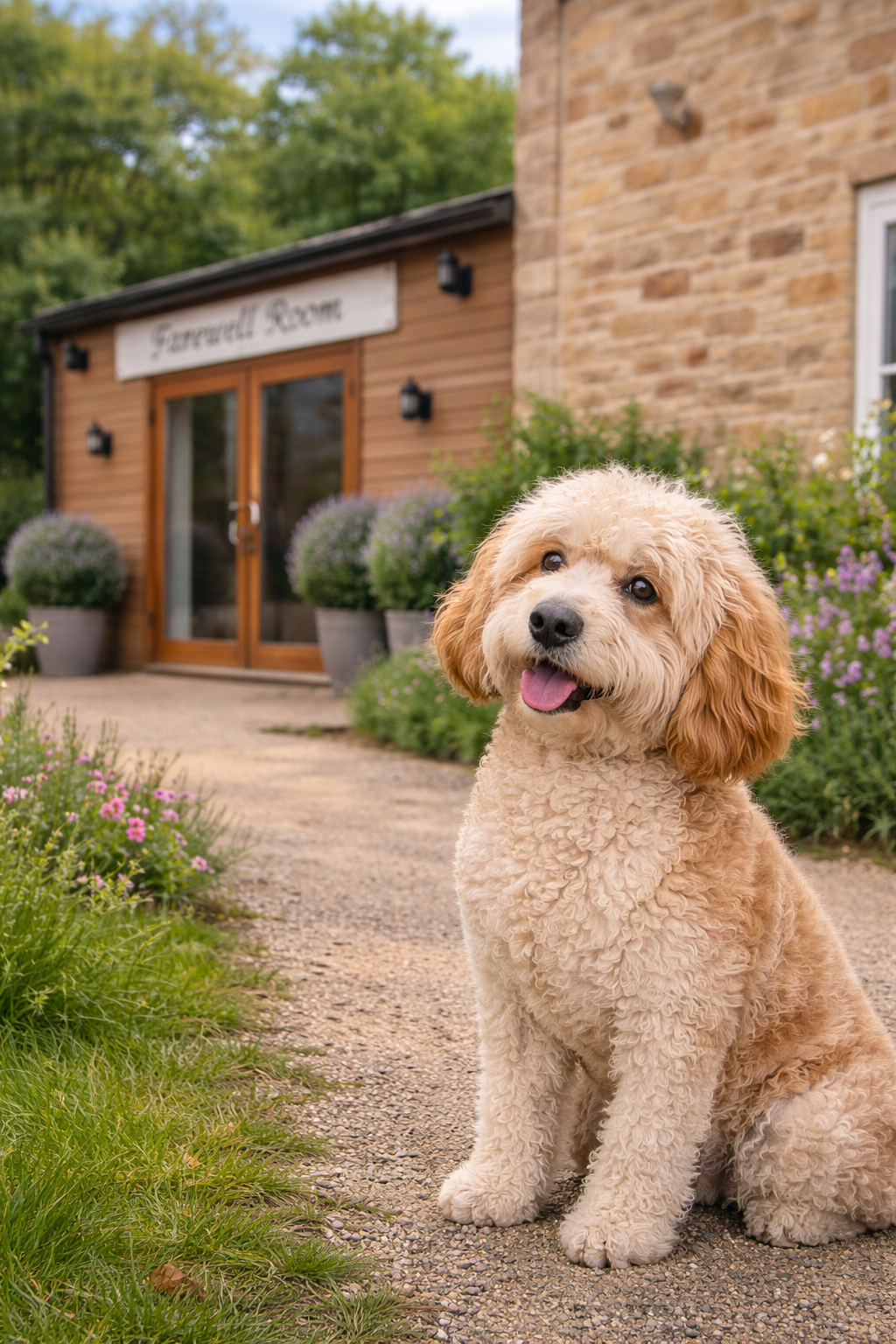
Here at Cherished Companion, families can visit our Farewell Room by arrangement and see the peaceful surroundings where their companions will be cared for.

It’s not a busy commercial reception.

It’s a quiet, private space overlooking the countryside.

Some families choose to spend time here saying goodbye.

Others find comfort simply knowing where their pet will be.

And for Mum & Dad, that openness and reassurance are incredibly important.

  1. Do I have to use the pet crematorium recommended by my vet?

And finally, here’s the question I really want everyone to remember.

  1. YOU HAVE A CHOICE!

If your pet passes away at a veterinary practice, you don’t have to use the pet cremation provider they normally work with.

You can choose your own independent crematorium and arrange for them to collect your pet directly from the vets.

Many families don’t realise this.

And because these conversations often happen at such an emotional time, it’s easy to simply accept the first option offered.

But you can ask questions, compare pet cremation prices and choose the provider you feel most comfortable with.

At Cherished Companion, Mum & Dad regularly collect pets from veterinary practices, liaising directly with the team to make arrangements as straightforward as possible.

And remember, you can organise these details in advance.

Planning ahead isn’t giving up. It’s making sure your pet receives the farewell you would want for them.

Finding a trusted local pet cremation service

If you’re searching for a trusted pet cremation provider near Glossop, you may be surprised just how far Cherished Companion’s service reaches.

Although Mum & Dad are based here on our smallholding in Glossop, they regularly support families across surrounding villages, Tameside, Saddleworth and the High Peak.

Our service area includes Hadfield, Padfield, Broadbottom, Hollingworth, Mottram, Stalybridge, Hyde, Ashton-under-Lyne, Greenfield, Grasscroft, Diggle, Hayfield, New Mills, Whaley Bridge and Oldham.

Whether you’re searching for individual pet cremation in Stalybridge, dog cremation in Hyde, cat cremation in Saddleworth, or a local pet cremation service near Glossop, we’re here to help.

Mum & Dad can explain the process, provide clear pricing, arrange collection from your home or vets, and help you choose the aftercare and keepsakes that feel right.

And if your pet is still with you but nearing the end of life, they can also help arrange pet euthanasia at home through our trusted veterinary partners.

Because compassionate support doesn’t have to begin with goodbye.

Fudge’s Final Thought 💭

Do you know what Mum & Dad hear far too often?

“We didn’t realise we could choose.”

And sometimes, sadly, that means families only discover the different pet cremation options after their beloved companion has already been taken into someone else’s care.

That’s why I wanted to share these 10 questions to ask a pet crematorium.

Not because every larger crematorium provides a poor service.

Not because choosing an independent provider is the only right answer.

But because every family deserves to understand their options and make an informed decision.

For Mum & Dad, Cherished Companion has always been about providing the sort of care they would want for me.

A familiar face.

A gentle collection.

A comfortable basket.

A peaceful place.

A proper, individual farewell.

And the reassurance of knowing exactly who is responsible for looking after your best friend.

Often at a more affordable price than people might expect.

So please, whether your pet is young and healthy or beginning to slow down, take a few minutes to understand your options.

And if you know another pet owner who might find this helpful, please share Fudge’s blog.

You never know which family might need this information one day.

If you’d like to ask Mum & Dad any questions, request a price or discuss arrangements for your beloved companion, just give them a call.

They’re always happy to talk.

Because choosing a pet crematorium isn’t just about arranging a service.

It’s about choosing who you trust to care for a member of your family.

And that matters.

After all…

EVERY PET DESERVES A CHERISHED FAREWELL. đŸ¤đŸž

Cherished Companion – Independent, Family-Run Pet Cremation & End-of-Life Support

📍 Glossop, Derbyshire
📞 07857 191672
🌐 www.cherishedcompanion.co.uk
📩 Contact us for advice, pricing or to arrange collection from your home or veterinary practice.


Categories
Uncategorized

Corporate vs Independent Pet Cremation: Does Your Pet Really Receive the Same Care?

Corporate vs Independent Pet Cremation: Does Your Pet Really Receive the Same Care?

Why choosing a family-run pet crematorium can mean more personal care, faster collection and a more affordable goodbye.

By Fudge 🐾
Official Cherished Companion Blogger.
Unofficial Office Manager.
Chief Basket Inspector and Head of Quality Control.

Hello, it’s Fudge 🐾

This week at Cherished Companion HQ, I’ve been doing a little investigating.

And no, before you ask, it wasn’t about who finished the last packet of biscuits. (Although that investigation is ongoing.)

It’s about something much more important.

What actually happens to your pet after you say goodbye?

You see, Mum & Dad have been speaking to families who didn’t realise there could be such a big difference between using a large corporate pet cremation company and a small, independent, family-run pet crematorium like ours.

Some assumed that every crematorium worked in much the same way.

Others believed that the service offered through their veterinary practice was their only option.

And quite a few were surprised to discover that a more personal pet cremation service can actually cost less.

So this week, I’m going to lift the lid on what happens behind the scenes, why the arrangements can be so different, and why choosing the right pet crematorium matters.

Because if you ask me, the love and respect we receive throughout our lives shouldn’t suddenly stop when it’s time to say goodbye.

What happens when you leave your pet at the vets?

Let’s start with something many families don’t think about until they are faced with it.

When a pet passes away at a veterinary practice, or is put to sleep there, the vet will often offer to arrange cremation.

That sounds straightforward, doesn’t it?

But what happens next?

Many veterinary practices use larger external pet cremation companies to provide their aftercare services.

Depending on the provider, pets may be placed in protective bags and kept in refrigerated storage until collection.

Some companies operate scheduled collection routes, collecting pets from multiple veterinary practices before transporting them to a central cremation facility.

And those facilities aren’t always nearby. They may be based in commercial buildings or on industrial estates, sometimes many miles away from the place where your pet lived.

Now, I should be fair here. Not every large crematorium works in the same way, and many have excellent standards of care.

But the important point is that collection, storage, transportation and cremation arrangements can be very different depending on which company is involved.

And not every family knows to ask.

  • Will my pet be placed in cold storage?
  • How long will they remain at the veterinary practice?
  • Who will collect them?
  • Will they travel alongside other animals?
  • Where will they actually be cremated?

These are all perfectly reasonable questions.

Because when you’ve spent years loving your companion, surely you deserve to know who will be looking after them at the very end.

How is an independent pet crematorium different?

Here at Cherished Companion, Mum & Dad have chosen to do things differently.

We are a small, independent, family-run pet crematorium based at our home on a peaceful smallholding in Glossop, Derbyshire.

Not a large commercial complex.

Not a busy industrial estate.

Our family home, surrounded by open countryside.

When a family calls us, Mum & Dad arrange prompt collection from their home or veterinary practice, on the same day.

And when Paul arrives, he doesn’t see a collection number.

He sees someone’s best friend.

Someone who has shared years of cuddles, muddy walks, adventures, companionship and unconditional love.

He’ll take time with the family, explain what happens next and make sure their pet is brought into our care gently and respectfully.

Once here, pets are placed in one of our comfortable baskets, with their blankets where appropriate, and remain in their basket until their individual cremation.

They stay here at Cherished Companion throughout their time in our care.

No routine transfer to another company’s crematorium. No scheduled collection round taking them from practice to practice.

Just Mum & Dad, caring for them here at home.

(And me, of course, supervising operations from my very important position on the sofa.)

Does it matter how a pet is treated after they’ve passed away?

Now, this is something Mum & Dad feel particularly strongly about.

Recently, a family told us about a conversation they’d had while discussing their pet’s aftercare.

They had explained that they didn’t want their beloved companion placed in cold storage and were reassured that, after euthanasia, their pet wouldn’t feel anything.

And medically, of course, that is true. Once an animal has died, they can no longer experience pain or discomfort.

But Mum & Dad believe there’s something very important missing from that explanation.

Dignity isn’t just about what an animal can feel. It’s about how we choose to treat them.

It’s about respect.

It’s about recognising that the animal in front of you was someone’s world.

Someone’s loyal companion for perhaps 10, 15 or even 20 years.

Someone who slept at the end of the bed, waited by the front door and made an ordinary house feel like home.

And even though they can no longer feel what’s happening, their family can.

For some families, knowing their pet will be kept somewhere cool and safe is perfectly acceptable.

For others, knowing their beloved companion will be brought directly into a family-run environment, placed gently in a basket and cared for by the same people throughout brings enormous reassurance.

Neither family should feel judged for their choice.

But every family deserves to understand what that choice involves.

Is independent pet cremation more expensive than corporate pet cremation?

Here’s something that surprises people.

A more personal service doesn’t necessarily mean a bigger bill.

In fact, Cherished Companion can often provide individual pet cremation at a lower price than some of the larger cremation packages offered through veterinary practices.

And that can come as quite a shock.

Because people naturally assume that something more personal, with individual attention, prompt collection and a quicker return of ashes, must be a premium service.

But that’s not always the case.

The cost of pet cremation in the UK varies depending on the size of your pet, the crematorium you choose, collection arrangements, ashes containers and any additional keepsakes.

At Cherished Companion, Mum & Dad believe in clear, transparent pricing.

Families can discuss exactly what they need without feeling pressured into expensive extras.

And because we’re a small family-run business, we’re able to offer a personal, flexible service without the same operating structure as a large national organisation.

So if you’re comparing pet cremation prices in Glossop, Tameside, Saddleworth or the High Peak, please don’t automatically assume your veterinary practice’s recommended package is the most affordable.

It’s always worth asking an independent pet crematorium for a quote.

You may find that you can pay less and receive a far more personal experience.

How quickly can I have my pet’s ashes returned?

This is one of the questions Mum & Dad hear most often.

“When can we have them back home?”

And I understand that. Because after losing a pet, the house can suddenly feel terribly quiet.

Their bed is still there. Their favourite toy is still on the floor.

And somehow, having them home again, even in a different way, can bring a little comfort.

When pet cremation is arranged through some larger providers, families may have to wait several days or longer for their pet’s ashes to be returned, depending on collection routes, processing arrangements and the veterinary practice.

At Cherished Companion, we aim to return ashes within 24–48 hours in most cases.

And sometimes, when circumstances allow, Mum & Dad can arrange an even quicker service.

Families can collect their pet’s ashes personally, or arrange for us to deliver them home.

Because while nothing can take away the heartbreak of losing a pet, Mum & Dad believe families shouldn’t have to wait unnecessarily for their companion’s return.

Paw prints, keepsakes and urns – those little details matter

Another lovely part of working with a smaller, independent pet crematorium is the opportunity to make the arrangements more personal.

Here at Cherished Companion, families can choose from a range of urns, caskets, scatter tubes and memorial keepsakes.

We can also provide paw prints, fur clippings and personalised memorial options.

And because Mum & Dad are directly involved in caring for each pet, those little details receive their personal attention.

Now, let me tell you something about Paul.

He is VERY particular about paw prints.

They have to be just right.

And if one isn’t quite good enough, he’ll take the time to make sure the family receives the best keepsake he can provide.

Because he knows there is no second chance.

A paw print isn’t just a paw print.

It’s the paw that’s been placed on your knee when you needed comfort.

The paw that’s left muddy marks across your kitchen floor.

The paw you would give absolutely anything to hold just one more time.

And that deserves care.

You don’t have to use the pet crematorium your vet recommends

Now, this is possibly the most important part of this week’s blog.

YOU HAVE A CHOICE.

If your pet passes away or is put to sleep at a veterinary practice, you don’t have to use the pet cremation company they normally work with.

You can choose your own independent pet crematorium.

And you can make those arrangements yourself, even if your pet is still at the vets.

Mum & Dad regularly collect pets directly from veterinary practices, making the whole process as straightforward as possible for families.

You simply let your vet know which crematorium you have chosen and contact us to arrange collection.

We’ll explain the next steps and liaise with the practice where needed.

And importantly, you can arrange all this before your pet passes away.

You don’t have to wait until you’re standing in a veterinary consulting room, trying to make decisions through tears.

Knowing your options in advance can make a heartbreaking day a little less overwhelming.

Where does Cherished Companion provide pet cremation?

Although Cherished Companion is based in Glossop, Mum & Dad support families across Derbyshire, Tameside, Saddleworth, the High Peak and surrounding parts of Greater Manchester.

We want more families to know that a local, independent pet cremation service is available to them.

Our service area includes:

Glossop and surrounding villages: Hadfield, Padfield, Broadbottom, Hollingworth and Mottram.

Tameside: Stalybridge, Hyde, Ashton-under-Lyne and surrounding communities.

Saddleworth: Greenfield, Grasscroft, Diggle and neighbouring villages.

High Peak: Hayfield, New Mills and Whaley Bridge.

Greater Manchester: Oldham and surrounding areas.

Whether you’re looking for pet cremation in Stalybridge, dog cremation in Hyde, cat cremation in Saddleworth, or individual pet cremation near Glossop, Mum & Dad are here to help.

We collect from family homes and veterinary practices, provide individual pet cremation here at our Glossop premises, and offer personal collection or delivery of ashes afterwards.

And if your pet is nearing the end of life, we can also help arrange pet euthanasia at home through our trusted veterinary partners.

Because looking after a family sometimes begins well before the goodbye itself.

Five questions every pet owner should ask

Before arranging your pet’s cremation, Mum & Dad encourage families to ask five simple questions:

  1. Where will my pet be taken?
    Ask for the name and location of the crematorium that will actually carry out the service.
  2. How will my pet be stored and transported?
    Will they be collected promptly or remain at the veterinary practice awaiting a scheduled collection?
  3. Who will be caring for my pet?
    Will the same team be responsible throughout, or will several organisations be involved?
  4. How quickly will their ashes be returned?
    Ask about expected timescales and whether the ashes can be delivered personally.
  5. What is the total cost?
    Compare what is included in the price, such as collection, urns, keepsakes and the return of ashes.

Because choosing a pet crematorium should be about more than simply accepting the first option presented to you.

It should be about finding a service that feels right for your family, your pet and your budget.

Fudge’s Final Thought 💭

Do you know what makes Mum & Dad sad?

It’s when someone tells them:

“I wish we’d known about you sooner.”

Not because they think everyone should choose Cherished Companion.

But because they believe everyone should at least know they have a choice.

For some families, the arrangements offered through their veterinary practice will be exactly what they want.

For others, knowing their beloved pet can be collected promptly, brought to our family home in Glossop, cared for in their own basket and returned within a day or two brings a comfort that’s difficult to put into words.

And when they discover that this kind of personal service can actually cost less than some larger cremation packages, it’s another welcome surprise at an incredibly difficult time.

So here’s my little request this week.

Please talk about this with other pet owners.

Tell your friends.

Tell your family.

Share this blog with someone who may not know they have a choice.

Because no family should have to discover their options after it’s too late to make them.

And if you’re in Glossop, Broadbottom, Hadfield, Padfield, Hollingworth, Stalybridge, Mottram, Hyde, Saddleworth, Hayfield, New Mills, Whaley Bridge or Oldham, please remember Mum & Dad are here.

Whether you need some information, a clear price, help arranging pet cremation, or simply someone kind to talk things through with, you’re welcome to get in touch.

You don’t have to wait until the worst day to ask.

Because to us, you’re not a booking number.

And your pet will never be just another collection.

They’re family.

And family deserves something special.

After all…

EVERY PET DESERVES A CHERISHED FAREWELL. đŸ¤đŸž

Cherished Companion – Independent, Family-Run Pet Cremation & End-of-Life Support

📍 Glossop, Derbyshire
📞 07857 191672
🌐 www.cherishedcompanion.co.uk
📩 Contact Mum & Dad for advice, pricing or to arrange collection from your home or veterinary practice.


Categories
Uncategorized

Children & Pet Loss: How to Talk to Kids About Saying Goodbye

Children & Pet Loss: How to Talk to Kids About Saying Goodbye

A gentle guide to supporting children grieving a pet, with love, honesty and reassurance

By Fudge 🐾
Official Cherished Companion blogger.
Unofficial cuddle coordinator.
Chief expert in sitting quietly beside people when they need it most.

Hello, it’s Fudge 🐾

This week at Cherished Companion HQ, Mum & Dad have been supporting families through some very emotional goodbyes — and one thing that comes up often is how hard it can be when children are part of that goodbye too.

Because when a pet is poorly, getting older, or nearing the end of life, grown-ups are often trying to cope with their own heartbreak while also wondering:

How do I explain pet death to a child?
What do I say when they ask if their pet is coming back?
Should they be involved in saying goodbye?
How can I help them understand without frightening them?

And oh, I know that is a big, tender subject.

Because to a child, a pet is often so much more than “just an animal”. They may be a best friend, a playmate, a comfort at bedtime, a companion after school, or simply a much-loved part of everyday family life.

So this week’s blog is all about children and pet loss — how to talk to kids about saying goodbye, how to explain pet death to a child in a gentle and honest way, and how families can offer loving pet loss support for children when their hearts are hurting.

Why pet loss can feel so big for children

For many children, losing a pet is their first real experience of death and grief.

That can make children grieving a pet feel especially vulnerable, confused, and overwhelmed. They may not yet have the words to explain what they are feeling, and they may not fully understand what death means in the way adults do.

Some children cry a lot.
Some ask lots of questions.
Some become quiet.
Some seem to carry on playing, then suddenly become upset later.

All of that can be completely normal.

Children often move in and out of grief differently from adults. One moment they may be deeply sad, and the next they may be talking about something else entirely. That does not mean they did not love their pet. It simply means children process difficult feelings in smaller pieces.

How to explain pet death to a child

One of the hardest things for parents is knowing what words to use.

When thinking about how to explain pet death to a child, the kindest approach is usually to be gentle, clear, and honest.

Simple language is often best.

You might say something like:

“Their body was very poorly and it stopped working.”
“The vet could not make them better.”
“They died, which means they cannot come back, but we will always love them and remember them.”

Those words can feel very difficult to say, but they help children understand what has happened more clearly.

It is often better to avoid phrases like:

  • gone to sleep
  • passed away, without explanation
  • we lost them
  • they’ve gone away

These phrases are often said with love, but they can confuse children. A child may become frightened of sleep, worry about getting lost, or keep waiting for their pet to return home.

Using gentle but truthful language can help make a painful situation feel a little safer and easier to understand.

Helping kids with grief in an age-appropriate way

Helping kids with grief does not mean telling them everything in adult detail. It means giving them honest information in a way they can cope with.

You do not need to overwhelm them.
You do not need to explain every medical detail.
You do not need to have the perfect words.

Usually, children just need help understanding the basics:

  • their pet was very poorly or very old
  • they were not going to get better
  • the kindest thing was to help them die peacefully, or to say goodbye after they had died
  • they were loved very much
  • none of this was the child’s fault

That last part matters a lot.

Children can sometimes blame themselves in ways adults do not expect. They may wonder if they caused it by being naughty, forgetting something, or not playing with their pet enough.

So part of pet loss support for children is gently reassuring them:

“This was not your fault.”
“You loved them, and they knew that.”

Should children be involved in saying goodbye?

There is no single right answer here.

Some children want to be involved. Some do not. Some may want to stroke their pet, draw them a picture, write them a note, or say goodbye in their own way. Others may prefer to remember them as they were.

What matters most is that children are given gentle choices where possible, without pressure.

If a pet is nearing the end of life, families may choose to let a child:

  • spend quiet time with their pet
  • say goodbye in their own words
  • give them a favourite blanket or toy
  • draw a picture
  • write a letter
  • place flowers nearby
  • help choose a keepsake or memorial item

Some families also choose pet euthanasia at home, which can create a calmer, more familiar setting if children are going to be involved in any part of the goodbye. Home can feel quieter, less clinical, and more private, allowing children to say goodbye in a gentler environment.

Every child is different, and every family is too. There is no perfect script — only what feels most loving and manageable for your child.

How children may show grief

When it comes to children grieving a pet, sadness does not always look the way adults expect.

A child may:

  • cry a lot
  • seem angry or irritable
  • ask the same questions again and again
  • become clingy
  • seem withdrawn
  • struggle at bedtime
  • act out at school or home
  • want to talk about their pet constantly
  • seem “fine” at first, then become upset days or weeks later

All of these can be part of grief.

Children often revisit loss in stages as they grow and understand more. A younger child may seem to accept it one day, then ask again the next where their pet is. This is not them forgetting. It is part of trying to make sense of something very big.

That is why helping kids with grief often means being patient with repeated questions, repeated feelings, and different emotions showing up at different times.

Let them remember in their own way

One of the most helpful things families can do is make space for remembrance.

For children, that might mean:

  • making a memory box
  • printing a paw print
  • keeping a photo by the bed
  • lighting a candle together
  • planting flowers
  • creating a scrapbook
  • writing a letter to their pet
  • talking about funny or happy memories

At Cherished Companion, Mum & Dad often see how meaningful keepsakes can be for families after pet loss, especially when children are involved. Something tangible — a paw print, a clipping of fur, a special photo, or a memorial item — can help a child feel connected and comforted.

These little acts can be a gentle part of pet loss support for children, helping children understand that although their pet has died, their love has not gone anywhere.

It is okay to let children see sadness

Sometimes adults worry they need to stay strong and hide all their feelings. But when children see grief handled gently, it can actually help them.

It shows them that sadness is normal.
It shows them that love and grief often sit side by side.
It shows them that crying is not wrong.

You do not need to be perfect.

You can simply say:

“I feel sad too because I loved them very much.”

That kind of honesty can help children feel less alone in their own feelings.

When a child asks difficult questions

Children can be beautifully honest, which means they may ask very direct questions, such as:

“Did it hurt?”
“Why couldn’t the vet fix them?”
“Are they coming back?”
“Where are they now?”
“Will you die too?”

These questions can catch grown-ups off guard, especially when emotions are already raw.

It is okay to pause.
It is okay to keep your answer simple.
It is okay to say, “That’s a really big question.”

If the pet was put to sleep because they were suffering, many families find it helpful to say something like:

“They were very poorly and the vet helped them die peacefully so they didn’t have to hurt anymore.”

That can be a gentle way of explaining pet death to a child while helping them understand that kindness was at the heart of the decision.

Pet loss support for children during and after goodbye

Families often think the hardest part is the moment of loss itself. But for children, grief can continue to show itself afterwards in quieter ways.

They may mention their pet unexpectedly.
They may become sad at bedtime.
They may struggle on birthdays, holidays, or when routines feel different.

That is why pet loss support for children should continue beyond the first few days.

Keep talking about the pet.
Say their name.
Share memories.
Let children know it is okay to still feel sad.

Sometimes the best support is not having the perfect words at all. It is simply being there, listening, and making space for whatever they feel.

Helping kids with grief while you are grieving too

This is the hard part, isn’t it?

Because parents are often trying to support a child while carrying their own heartbreak at the same time.

Please be gentle with yourselves too.

You do not have to have all the answers.
You do not have to do this perfectly.
You do not have to make grief neat and tidy.

If your child feels loved, heard, and reassured, that matters more than saying everything exactly right.

Fudge’s Final Thought 💭

If you are reading this because your family is facing a goodbye, and you are worried about children grieving a pet, please know this:

There is no perfect way to do this. 🐾

There is only love, honesty, reassurance, and being there for them.

When thinking about how to explain pet death to a child, the gentlest thing is often the simplest: tell the truth kindly, make space for their feelings, reassure them that it is not their fault, and help them remember their pet in a way that feels meaningful.

Whether you are looking for help with pet loss support for children, guidance on helping kids with grief, or support as your pet nears the end of life, Mum & Dad are here for families every step of the way.

And if your family is facing a goodbye, Mum & Dad can also help with gentle end of life support, pet euthanasia at home, and individual pet cremation afterwards — all handled with kindness, dignity, and care.

Because every pet deserves comfort.
Every child deserves gentle support.
And every goodbye deserves kindness.

After all…
EVERY PET DESERVES A CHERISHED FAREWELL. 🤍🐾


Categories
Uncategorized

Saying Goodbye at Home: The Comfort of a Calm, Familiar Space

Saying Goodbye at Home: The Comfort of a Calm, Familiar Space

A gentle guide to euthanasia at home, and why many families choose a peaceful goodbye

Hi, it’s Fudge 🐾

Official Cherished Companion blogger.
Unofficial office manager.
Chief cuddle coordinator.

This week at Cherished Companion HQ, Mum & Dad have been supporting more families who are asking a really important question:

“Do we have to go to the vets… or can it be done at home?”

And the answer is — you do have a choice.

Many people don’t realise that pet euthanasia at home is an option. They assume the final goodbye has to happen at a veterinary practice, often in a clinical room, at a time that may feel rushed or overwhelming.

But for many pets — and many families — saying goodbye at home can feel calmer, gentler, and more natural.

So this week, I wanted to share what at home pet euthanasia looks like, and why it can be such a peaceful way to say goodbye.

What is euthanasia at home?

Euthanasia at home means a qualified, trusted vet comes to your home to gently put your pet to sleep in familiar surroundings.

Instead of travelling to the vet:

  • Your pet stays in their safe, known environment
  • There are no waiting rooms, no unfamiliar smells, no added stress
  • You can choose where it happens — their bed, the sofa, the garden, or wherever they feel most comfortable

For many families across Glossop, Ashton-under-Lyne, Stalybridge, Marple, Saddleworth, Mossley, Hayfield and the wider Greater Manchester & High Peak areas, this feels like a much more peaceful and personal option.

Why many families choose a home goodbye

🐾 Familiar surroundings

Pets are most relaxed in the places they know. At home, they are surrounded by:

  • Their bed
  • Their smells
  • Their people

This can make a huge difference, especially for older pets, anxious pets, or those in pain.

🐾 Less stress and anxiety

Travelling to the vet can be difficult:

  • Lifting or carrying a poorly pet
  • Car journeys that cause distress
  • Waiting rooms with unfamiliar animals and noises

With at home pet euthanasia, all of that is removed.

🐾 Time and space to say goodbye

At home, there is no sense of being rushed.

You can:

  • Sit with your pet
  • Hold them
  • Talk to them
  • Take your time

And that space can mean everything.

🐾 A more peaceful experience

All of the vets we work with use a gentle sedation first, allowing your pet to fall into a deep, relaxed sleep before the final injection.

This means:

  • No fear
  • No panic
  • Just a calm, peaceful passing

It’s what many families describe as a peaceful pet euthanasia, and it can be a far gentler experience for both pets and owners.

What actually happens during home euthanasia?

One of the biggest worries families have is not knowing what to expect.

Here’s a simple guide:

  1. The vet arrives at your home and gives you time to settle
  2. They will talk you through everything calmly
  3. Your pet is given a sedative, helping them relax and fall asleep
  4. Once they are fully settled, the final injection is given
  5. Your pet passes peacefully, with you there

There is no rush. Everything is done gently, step by step.

Dog put to sleep at home

For many families, choosing to have their dog put to sleep at home feels right because:

  • Dogs are often deeply attached to their home and family
  • Travel can be stressful or painful
  • Being close to their owners brings comfort in their final moments

Even the smallest details — lying on their favourite blanket, hearing your voice, being stroked — can make a difference.

Cat put to sleep at home

Cats, especially, can benefit from being at home.

If you’ve ever tried to take a poorly cat to the vet, you’ll know:

  • The carrier can be stressful
  • The journey can be unsettling
  • The environment is unfamiliar

Choosing to have a cat put to sleep at home allows them to remain in a quiet, familiar space — often where they feel safest.

When is the right time?

This is the hardest question of all.

Many families tell us they feel:

  • Unsure
  • Worried about making the decision too soon
  • Or worried about waiting too long

That’s why we can help arrange a home visit from a trusted vet, not just to carry out euthanasia, but to assess your pet and talk through options.

Sometimes it’s not time yet.
Sometimes it is.

But you don’t have to figure that out alone.

What happens afterwards?

After your pet has passed, we can take care of everything that follows.

We offer:

  • Immediate collection from your home
  • Gentle, respectful transfer into our care
  • Individual pet cremation in Glossop
  • Ashes returned to you, usually within 24–48 hours
  • Keepsakes such as paw prints and fur clippings

Your pet stays with us throughout — never passed from place to place.

Fudge’s Final Thought 🐾

From what I see here at home… the best place in the world is where you feel safe.

Your bed. Your people. Your smells. Your routine.

So when the time comes, it makes sense that for many pets, the gentlest goodbye is in that same place — not somewhere clinical or unfamiliar, but somewhere filled with love.

Whether it’s a big dog stretched out on the sofa, or a quiet cat curled up in their favourite spot, they deserve to feel safe, right to the very end.

If you’d like to talk things through

If you’re considering euthanasia at home, or you’re not sure what the right next step is, we’re here.

We can help with:

  • Pet euthanasia at home through trusted local vets
  • Advice and guidance, with no pressure
  • Immediate collection and aftercare
  • Individual pet cremation in Glossop and surrounding areas

📞 You’re always welcome to call us for a quiet, supportive chat.

Because…
Every pet deserves a cherished farewell. đŸ¤đŸž


Categories
Uncategorized

How Long Does Pet Cremation Take? Ashes Return Time

How Long Does Pet Cremation Take? Timelines, Ashes Return & What to Expect

A gentle guide to understanding the pet cremation timeline and when your pet’s ashes will be returned

By Fudge 🐾
Official Cherished Companion blogger.
Unofficial cuddle coordinator.
Senior sofa-based life observer.


Hello, it’s Fudge 🐾

This week, I’ve been listening to Mum & Dad speaking with families who are going through one of the hardest moments of all…

Saying goodbye.

And one of the most common questions they hear is:

“How long does pet cremation take?”
Or…
“When will I get my pet’s ashes back?”

Because when your heart is hurting, waiting can feel even harder.

So today, I wanted to gently walk you through what to expect — in a calm, simple way 🤍


🐾 How long does pet cremation take?

The honest answer is:

👉 It depends on the service you choose — but it can be much quicker than many people realise.

At Cherished Companion, the typical pet cremation timeline is 24–48 hours from the time your pet comes into care to when their ashes are ready to come home.

But this isn’t the same everywhere — and understanding why can really help.


🐾 Why pet cremation timelines can be different

Many families don’t realise that cremation times can vary depending on how services are arranged.

For example:

• Some veterinary practices use larger, external cremation providers
• Pets may be collected in batches (sometimes weekly)
• They may be kept in cold storage while waiting for collection
• Ashes return time can be 1–2 weeks (or sometimes longer)

That’s why some families find themselves asking:

👉 “Why is it taking so long to get my pet’s ashes back?”

And often… they simply weren’t told what to expect.


🐾 A more personal pet cremation timeline (what we do differently)

At Cherished Companion, everything is done a little differently — and a little more personally.

Here’s what typically happens:

1. Immediate or same-day collection
From your home, your vet, or our Farewell Room

2. Your pet stays in our care
They are never passed between companies

3. Individual cremation
Always carried out with dignity and care

4. Ashes returned within 24–48 hours
Personally returned home, or ready for collection

For many families, this shorter pet ashes return time brings real comfort 🤍


🐾 When will I get my pet’s ashes?

👉 With a personal, independent service, ashes are often returned within a couple of days

👉 With larger providers used by many vets, it may take a week or more

There is no right or wrong — only what feels right for you.


🐾 Why some families choose a quicker ashes return

For some people, having their pet home sooner helps with the grieving process.

It can mean:

• Less time wondering where they are
• Comfort in knowing they are being cared for closely
• The ability to begin saying goodbye in their own time

And sometimes… it simply feels like bringing them back where they belong 🐾


🐾 What matters most

Timelines are important.

But what matters most is this:

👉 How your pet is cared for
👉 How you feel during the process
👉 Whether you were given the choice

Because many families tell us the hardest part wasn’t the goodbye…

It was not knowing what would happen next.


🐾 A gentle reminder

If you are reading this and starting to wonder about the future, please know:

Planning ahead is not giving up 🤍
It is one of the kindest things you can do.

Understanding the pet cremation timeline, your options, and when you will receive your pet’s ashes can bring a little clarity during a very difficult time.


🐾 We’re always here

If you would like to talk things through, ask questions, or simply understand your options:

We are always here — with no pressure, just support.

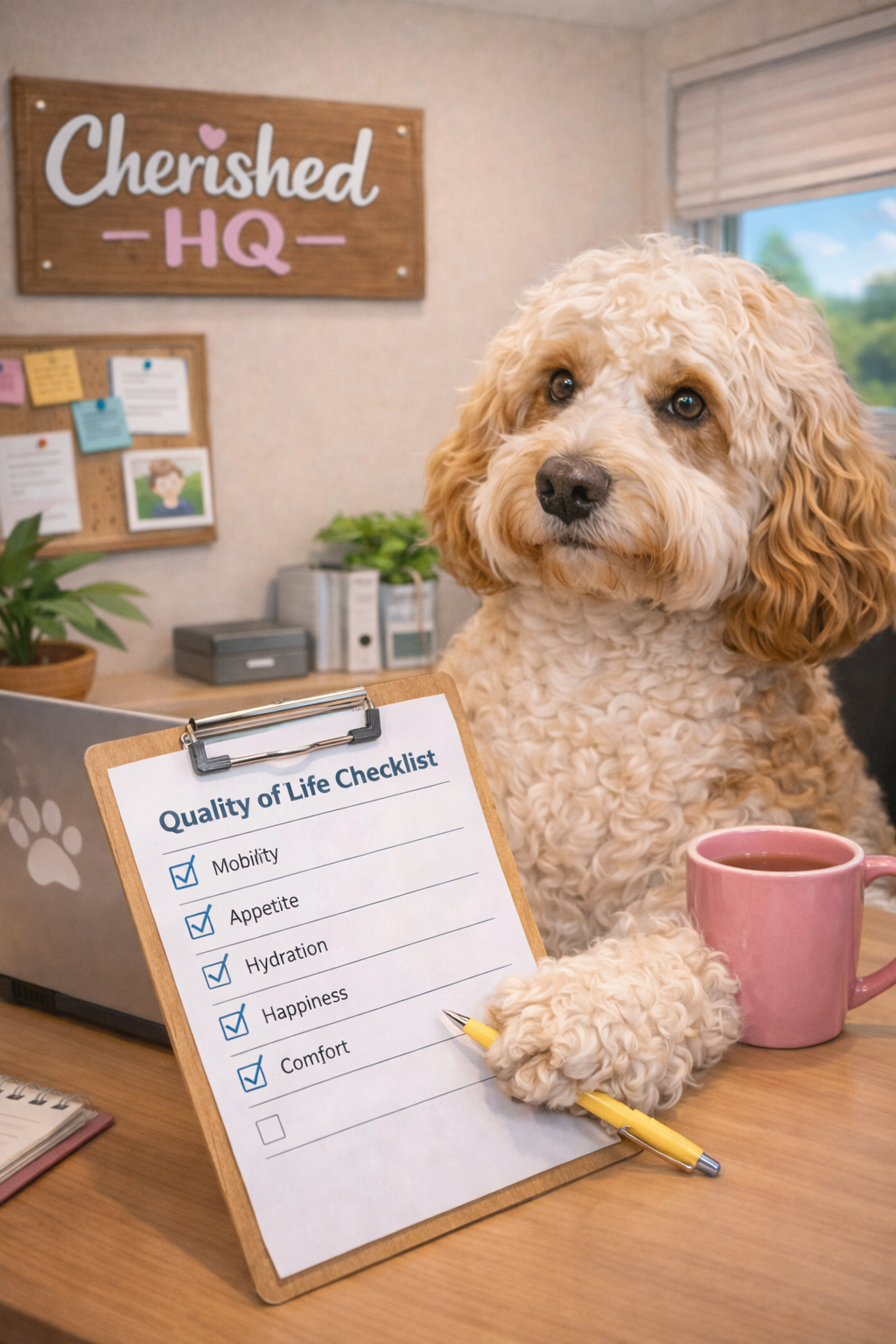
And if you’d like a copy of our Quality of Life Checklist, just ask.

Mum loves sharing it (I supervise, obviously 🐾).


Sending you a gentle paw and a lot of love,
Fudge 🐾

Categories
Uncategorized

What Happens at a Pet Crematorium? A Step-by-Step Explanation

What Happens at a Pet Crematorium? A Step-by-Step Explanation

A gentle guide to pet cremation, aftercare, and the choices you have when saying goodbye

Hi, it’s Fudge 🐾

Official Cherished Companion blogger.
Unofficial office manager.
Chief treat inspector.

One thing I hear Mum & Dad say all the time here at Cherished Companion HQ is this:
so many families don’t realise they have a choice.

When a much-loved pet dies, everything can happen very quickly. Families are upset, decisions feel overwhelming, and sometimes people simply go along with what happens next because they don’t know there are other options.

That’s exactly why we wanted to write this blog.

We want families across Glossop, Greater Manchester and the High Peak to understand what happens during pet cremation, what the pet crematorium process usually looks like, and how choosing a more personal, independent service can feel very different.

Because when it comes to saying goodbye, knowing your options matters. 🤍

When the time comes to say goodbye to a much-loved pet, many families tell us the same thing:
“We don’t actually know what happens next.”

It’s completely understandable. Unless you’ve been through it before, the pet cremation process can feel unclear — and often, decisions are made quickly without knowing all the options.

So we wanted to create a simple, gentle guide to explain what happens during pet cremation, and how the experience can differ depending on who you choose to care for your pet.

Step 1: Saying goodbye

This may take place:

  • At your veterinary practice, or
  • At home, through pet euthanasia at home with a trusted vet, or
  • In a private, calm setting like our Farewell Room in Glossop

Wherever it happens, this is your time — and there is no “right” way to say goodbye.

Step 2: What happens after your pet passes away

This is where many families are unaware that they have a choice.

Option 1: Using your vet’s cremation provider

If your pet is left with the vets, they are usually:

  • Placed into cold storage
  • Awaiting collection by the practice’s usual cremation provider
  • Collected on a scheduled basis, often weekly

For some families, that feels absolutely fine.

For others, it can feel a little impersonal — especially if they didn’t realise there were alternatives.

Option 2: Choosing a more personal approach with an independent provider like Cherished Companion

If you choose an independent, family-run provider like Cherished Companion, the experience can feel very different.

We offer:

  • Immediate or same-day collection from your home or vet
  • Your pet is brought straight into our care in Glossop
  • No waiting in cold storage
  • A calm, respectful transfer into a soft basket, where they remain until cremation

For many families across Glossop, Ashton-Under-Lyne, Dukinfield, Stalybridge, Oldham, Marple, Sale, Hayfieldand the wider Greater Manchester and High Peak areas, this brings huge comfort — knowing their pet is being cared for straight away.

Step 3: Individual pet cremation

If you choose individual pet cremation, your pet is cremated on their own, and their ashes are returned to you.

At Cherished Companion:

  • Your pet stays on-site with us at all times
  • They are never transported elsewhere
  • Every step is handled personally and respectfully

This is very different from larger, corporate providers, where pets are often transported to larger facilities and processed at scale.

Step 4: Returning your pet’s ashes

This is another area where experiences can differ.

In many cases, if arrangements are made through a veterinary practice:

  • You will be asked to return to the reception desk to collect ashes
  • This can take a week or longer

With us, we do things differently:

  • Ashes are typically returned within 24–48 hours
  • We personally deliver them back to your home
  • Or you are welcome to return to us in a more private, peaceful setting

For many families, this part matters more than they expect — because it’s part of how you remember those final days.

Step 5: Aftercare and keepsakes

We also offer:

  • Paw prints and fur clippings
  • Bespoke keepsakes and memorial items
  • Support and guidance if you’re unsure what you’d like

There is no pressure — just options, gently explained.

Why understanding the process matters

The biggest thing we hear from families is:
“We didn’t realise we had a choice.”

Understanding the pet crematorium process ahead of time allows you to:

  • Make decisions without pressure
  • Choose what feels right for your pet
  • Avoid surprises at an already difficult time

Planning ahead isn’t giving up — it’s one of the kindest things you can do.

Fudge’s Final Thought 🐾

From what I see here at Cherished Companion HQ… it’s not just about what happens. It’s about how it happens.

A quiet goodbye. A gentle journey. A soft place to rest.

Whether it’s a big dog with muddy paws or a tiny cat who ruled the house, they’re family — and they deserve to be treated that way, every step of the way.

If you’d like to talk things through

If you’re starting to think about the future, or you’ve recently said goodbye and aren’t sure what to do next, we’re here.

We can help with:

  • Pet home euthanasia support through trusted vets
  • Immediate collection from vets or home
  • Individual pet cremation in Glossop
  • Gentle, personal aftercare from start to finish

📞 You’re always welcome to call us for a quiet, no-pressure chat.

Because…
Every pet deserves a cherished farewell. đŸ¤đŸž


Categories
Uncategorized

The Quality of Life Checklist: A Gentle Guide for Difficult Decisions

The Quality of Life Checklist: A Gentle Guide for Difficult Decisions

A simple way to look at your pet’s comfort, happiness and daily wellbeing — with support for pet euthanasia at home and pet cremation

By Fudge 🐾
Official Cherished Companion blogger.
Unofficial cuddle coordinator.
Senior sofa-based life observer.

Hello, it’s Fudge 🐾

This week at Cherished Companion HQ, Mum & Dad have been speaking to more families who are worried about their pet’s comfort, health, and whether they may now be struggling more than they should be.

Because one of the hardest questions is not always just, â€œIs it time?”

Very often, it’s:

“Are they in pain?”
“Are they uncomfortable?”
“Are they still enjoying life?”
“And is putting them to sleep now the kindest thing I can do?”

That’s why this week’s blog is all about the pet quality of life checklist Mum & Dad often talk through with families.

Not as a cold checklist.
Not as a rushed decision.
But as a gentle, honest way of looking at whether a pet is still comfortable, coping well, and enjoying life — or whether pain, weakness, confusion or distress may be starting to outweigh the good moments.

This week, Mum & Dad have supported families across Glossop, Stalybridge, Ashton-under-Lyne, Mossley, Saddleworth, Greenfield, Hayfield Romiley and Marple, helping people who are worried about what their pet is telling them and what the kindest next step might be. For some, that means a supportive conversation. For others, it means arranging pet euthanasia at home with a trusted vet, followed by gentle pet cremation and aftercare.

So, from one highly observant dog to the humans who love them very much, here is a softer guide to looking at your pet’s quality of life.

What is a pet quality of life checklist?

A pet quality of life checklist is simply a way of stepping back and asking:

How is my pet really doing now?

Not how they were a few months ago.
Not how you hope they’ll be next week.
But how life feels for them today.

It helps families look at the fuller picture — comfort, pain levels, mobility, appetite, dignity, enjoyment, and whether their pet is still able to take pleasure in the little things that matter to them.

Because when decline happens slowly, it can be very hard to judge clearly. Changes often happen bit by bit. A little less energy. A little less appetite. A little more discomfort. A little less sparkle.

And when you love your pet deeply, it can be hard to know whether they are still living well… or simply carrying on for your sake.

Why a quality of life checklist can help

When a pet becomes poorly, families often feel pulled in two directions.

Their heart says:
“I’m not ready.”

Their mind says:
“I’m worried they may be suffering.”

And both of those things can be true at the same time.

That is why a pet end of life guide can be so helpful. A checklist does not make the decision for you, and it does not replace veterinary advice. What it does do is give you a calmer way to look at your pet’s day-to-day life when emotions are understandably running high.

It helps turn worry into something gentler and clearer.

What should you look at on a pet quality of life checklist?

When Mum & Dad talk to families about quality of life, they usually encourage them to think about a few key areas.

Pain and comfort

Is your pet comfortable most of the time?
Does pain seem to be controlled, or are they increasingly restless, tense, unsettled, or unable to relax?

Eating and drinking

Are they still interested in food and water?
Are they eating enough to maintain strength, or has their appetite changed significantly?

Mobility

Can they get up, walk, toilet, and settle comfortably?
Are they slipping, falling, struggling, or needing much more help than before?

Hygiene and dignity

Can they keep themselves reasonably clean and dry?
Are accidents becoming frequent, or is weakness making normal toileting difficult and distressing?

Enjoyment

Do they still enjoy the things they used to?
That might be fuss, food, company, being outside, going for a walk, sitting in the sunshine, or curling up in a favourite spot.

Good days and bad days

Are there still more good days than difficult ones?
Or are the hard days beginning to happen more often?

These are often the same areas used in a quality of life scale for dogs and a quality of life scale for cats, because although dogs and cats can show decline differently, the heart of the question is the same:

Is life still comfortable and enjoyable for them?

Quality of life scale for dogs

A quality of life scale dog guide can be especially helpful because dogs often keep trying, even when their bodies are struggling.

Families may notice that their dog is finding it harder to get up, no longer wanting walks, panting more, pacing, seeming uncomfortable, or losing interest in food, toys, or daily routines.

And yet many dogs will still wag their tail when they see the people they love.

That is what makes it so hard.

A wagging tail does not always mean everything is okay. Sometimes it simply means your dog still loves you, even while their body is finding life harder.

A quality of life scale for dogs helps owners look beyond one bright moment and consider how their dog is coping across the whole day.

Quality of life scale for cats

A quality of life scale cat guide can be just as important, because cats are often much quieter about discomfort.

They may hide more, eat less, lose weight, stop grooming properly, sleep in unusual places, become less steady on their feet, or withdraw from the people and routines they normally enjoy.

Cats do not always shout when something is wrong.

Sometimes they whisper.

That is why a quality of life scale for cats can help families notice the quieter signs and gently assess whether their cat is still comfortable, content and managing well.

How to know if your pet may be struggling more than they should

Often there is not one dramatic sign that suddenly tells you everything.

More often, it is a collection of changes:

A harder morning.
A restless night.
Less interest in food.
Less enjoyment.
More discomfort.
More help needed.
A sense that your pet is no longer truly feeling like themselves.

For many families, a pet quality of life checklist does not reveal a brand-new truth. It simply puts shape around what their heart has already started to notice.

That is why it can be such a valuable guide. It helps you look gently and honestly at whether your pet is still comfortable, or whether the kindest decision may be getting closer.

Writing things down can really help

Mum & Dad often suggest that families make a few simple notes over several days.

Did they eat well today?
Were they comfortable?
Did they seem settled?
Could they walk or toilet easily?
Did they still enjoy anything?
Was today a good day or a difficult one?

A written pet quality of life checklist can help patterns become clearer, especially when each day feels emotional and blurred.

Sometimes that written record brings reassurance.

Sometimes it brings the quiet realisation that the difficult days are beginning to outweigh the good ones.

A checklist is not giving up

This part matters.

Looking at a pet end of life guide, or using a quality of life scale dog or quality of life scale cat, does not mean you are giving up on your pet.

It means you are trying to look at their world honestly.
It means you care enough to ask difficult questions.
It means you want to protect them from unnecessary suffering.

And that is love.

Not the easy kind.
The brave kind.

When support matters most

One of the things Mum & Dad care about most is making sure families feel supported, not pressured.

Sometimes people worry that asking for help means they will be pushed into making a decision immediately. But often what they need most is simply a calm conversation, a gentle guide, and an honest opinion.

This week, Mum & Dad have helped families who just needed to talk things through, as well as families who needed a trusted vet to visit their pet at home and assess whether the time had come.

That support can make a huge difference.

Especially because the vets they work with can review the pet’s history and clinical records where possible, so they understand the bigger picture and not just one difficult moment.

When the kindest option may be pet euthanasia at home

Sometimes a checklist helps families realise that their pet’s comfort and quality of life have declined to the point where saying goodbye may now be the kindest thing.

If that happens, Mum & Dad can help arrange pet euthanasia at home with a trusted vet.

For many pets, home euthanasia for dogs or home euthanasia for cats can be the gentlest option, because it avoids the stress of travel, waiting rooms, unfamiliar smells, and the anxiety that often comes with a final trip to the vet practice.

Instead, your pet can remain where they feel safest — on their own bed, in the garden, on the sofa, or with their head in your lap.

For families, pet euthanasia at home also allows space. Space to ask questions, cry, hold them close, and say goodbye privately and calmly.

And because the vet has access to your pet’s records where possible, families can feel reassured that the decision is being made with a fuller understanding of their pet’s health and history.

Pet cremation and aftercare support

If a goodbye does need to happen, Mum & Dad can continue supporting families afterwards with gentle aftercare and individual pet cremation.

At Cherished Companion, pets stay in our care and are treated with the same dignity, gentleness and respect that families would want for them. Our pet cremation in Glossop is personal, family-run, and focused on making a heartbreaking time feel a little less overwhelming.

For many families, knowing exactly where their pet is, who is caring for them, and that they are not being passed from place to place brings enormous comfort.

Whether the goodbye happens at home or at the vets, Mum & Dad can support with pet cremation, aftercare, and a farewell that feels loving and dignified from start to finish.

Fudge’s Final Thought 💭

If you are reading this because your pet is changing, and you are worried they may be in pain, uncomfortable, or no longer enjoying life in the way they once did, please know this:

You are not failing them by asking the question. 🐾

You are loving them.

A pet quality of life checklist is not about taking hope away. It is about helping you look honestly and gently at your pet’s comfort, happiness and dignity, especially when your heart is aching and your mind feels full.

Whether you are looking for a quality of life scale for a dog, a quality of life scale for a cat, or a softer pet end of life guide to help you think things through, Mum & Dad are here to support you.

And if you need more than a checklist — if you need a conversation, guidance, help arranging pet euthanasia at home, or support with individual pet cremation afterwards — they are here for that too.

Because every pet deserves comfort.
Every family deserves support.
And every difficult decision deserves kindness.

After all…
EVERY PET DESERVES A CHERISHED FAREWELL. đŸ¤đŸž


Categories
Uncategorized

When Is the Right Time? Signs Your Pet May Be Nearing End of Life | Pet Euthanasia at Home & Pet Cremation in Glossop


When Is “The Right Time”? Signs Your Pet May Be Nearing End of Life

Pet Euthanasia at Home, Pet Quality of Life & Pet Cremation Support in Glossop

By Fudge 🐾
Official Cherished Companion blogger.
Unofficial emotional support supervisor.
Chief treat inspector.

Hello, it’s Fudge 🐾

This week at Cherished Companion HQ, Mum & Dad have been supporting lots of families asking one very difficult question…

“How do I know if it’s the right time?”

And oh, I know that’s a big one.

Because nobody ever wants to make that decision too soon. But they also don’t want to leave it too late and risk their beloved pet suffering. It’s one of the hardest parts of loving an animal so deeply — knowing when to hold on, and when the kindest thing may be to let go.

This week, Mum & Dad have spoken to so many families needing gentle end of life support for pets, and many of those conversations have led to arranging pet euthanasia at home with our trusted veterinary partners. In some cases, families simply needed reassurance and guidance. In others, it became clear that a peaceful goodbye at home was the kindest choice.

So this week, I thought I’d write about that very question.

Not because there’s one simple answer (I’m a dog, not a wizard), but because so many families are quietly carrying this worry and wondering whether what they’re seeing means their pet may be nearing the end of life.

When to put a dog to sleep… or when to put a cat to sleep

Mum & Dad hear these questions a lot:

  • When is it time to put a dog to sleep?
  • How do I know when to put a cat to sleep?
  • Am I leaving it too late?
  • What if I choose pet euthanasia too soon?
  • How do I know what’s fairest for my pet?

The truth is, most loving owners do not ask these questions lightly. By the time they call, it’s usually because something has changed. Their dog may be struggling more. Their cat may no longer be enjoying the things they once loved. Or there’s simply that quiet feeling in their heart that things aren’t quite right anymore.

And that matters.

Because you know your pet better than anyone.

Signs a dog is nearing end of life

Every pet is different. Some changes happen gradually, while others happen very suddenly. But some of the common signs families describe to Mum & Dad include:

  • struggling to stand, walk, or get comfortable
  • no longer wanting to eat or drink
  • weakness or extreme tiredness
  • confusion, restlessness, or seeming “not themselves”
  • pain that no longer seems well controlled
  • breathing changes
  • incontinence or difficulty toileting
  • no interest in favourite things, favourite people, or normal routines
  • more bad days than good days

These can be some of the signs a dog is deteriorating, or signs that a beloved pet is nearing the end of life. For cats, the changes can sometimes be quieter and more subtle. Families may notice hiding away, withdrawing, sleeping more, losing weight, eating less, changes in grooming, or simply seeming unlike themselves.

These signs don’t always mean it is definitely time straight away — but they do mean it may be time to seek support, look at your pet’s quality of life, and speak to someone who can help you assess things gently and honestly.

Looking at your pet’s quality of life

One phrase Mum & Dad talk about a lot is pet quality of life.

That means stepping back and gently looking at how your pet is coping overall, rather than focusing on one single moment.

Are they still comfortable?

Are they still enjoying the things that matter to them?

Are they still managing more good days than bad?

Can their pain, anxiety, sickness or distress still be controlled?

Sometimes families know in their heart that their pet is fading, but they need reassurance. They need someone calm and experienced to help them look at the full picture without pressure.

And that’s okay.

In fact, that’s sensible.

Why a home visit can help when you’re not sure

This week, Mum & Dad have supported families across Glossop, Stalybridge, Ashton-under-Lyne, Mossley, Saddleworth, Greenfield, Hayfield and Marple, helping people who were asking whether now was the right time.

For many of those families, the answer started with arranging a vet to visit their pet at home.

Sometimes the pet was already very poorly, and it was sadly clear that pet euthanasia at home was the kindest option. But sometimes what families needed first was an assessment, a calm conversation, and a professional opinion in the comfort of their own home.

That can make such a difference.

A home visit means your pet can stay somewhere familiar — on their favourite bed, in the garden, curled up on the sofa, or with their head in your lap. There’s no stressful car journey, no waiting room, no unfamiliar smells, and no added anxiety for pets who are already struggling.

For owners, it also allows a quieter and more personal conversation. There’s time to talk, ask questions, cry if needed, and make decisions without feeling rushed.

And importantly, the trusted vets Mum & Dad work with obtain your pet’s history and clinical records where possible, so they have a fuller picture of your companion’s health before they arrive. That means families are supported by a vet who understands not just how the pet looks in that moment, but the wider story too.

(Which, as Head of Household Observation, I can confirm is much better than guessing.)

A gentle assessment can bring clarity

One of the hardest things for families is the uncertainty.

Sometimes they feel their pet is telling them it’s time, but they need someone kind and experienced to confirm that feeling. This week, Mum & Dad have helped several families in exactly that position — loving owners who didn’t want their pet to suffer, but also didn’t want to make such a huge decision without guidance.

When a trusted vet visits your home, they can assess your pet carefully, explain what they’re seeing, talk through whether there are any realistic options left, and help you decide what is fairest and kindest.

Sometimes that conversation ends with:
“Not today.”

And sometimes it ends with a peaceful goodbye.

But either way, families often tell Mum & Dad the same thing afterwards — that they felt supported, informed, and less alone.

Why pet euthanasia at home can be kinder

When it is time, many families find comfort in choosing pet euthanasia at home.

For pets, it can mean less fear, less stress, and a gentler experience in familiar surroundings. For dogs, especially those who dislike the car or the vet practice, home euthanasia for dogs can be much calmer. For cats, being allowed to remain safely at home can avoid a great deal of distress too, which is why home euthanasia for cats can also be such a kind option.

For families, it allows the goodbye to be private, personal and unhurried. There’s no waiting room, no reception desk, and no drive home with an empty collar or carrier beside you.

There is simply space.

Space to hold them.
Space to talk to them.
Space to cry.
Space to say goodbye properly.

And afterwards, Mum & Dad can continue that support with loving aftercare and individual pet cremation at our family-run premises in Glossop.

Pet cremation and aftercare support

At Cherished Companion, support doesn’t end at the goodbye.

After pet euthanasia at home, or after a goodbye at the vets, Mum & Dad can help with pet cremation, gentle collection, and individual aftercare. Every pet brought into our care stays with us on-site and is looked after with love, dignity and respect.

For families, that often brings huge comfort.

Knowing where their pet is.
Knowing who is caring for them.
Knowing they are not being passed from place to place.

Our individual pet cremation in Glossop means pets remain in the care of our family-run team, and families can choose the goodbye and memorial options that feel right for them.

If you’re asking the question, it may be time to talk

Now, I’m not saying that every sleepy day, every wobble, or every older pet means the end is here. Not at all.

But Mum & Dad often say this:

If you’re starting to ask the question, it may be time to have the conversation.

Not necessarily to say goodbye that day.
Not necessarily to make the final decision immediately.
But to reach out, talk it through, and get some support.

Because wondering alone can feel unbearable.

Sometimes families wait because they hope for one big sign. One obvious moment. One clear answer. But often it isn’t like that.

Often it’s quieter.

It’s a collection of changes.
A look in their eyes.
A sense that they’re tired.
The feeling that they’re no longer truly enjoying life the way they used to.

And that’s why support matters so much.

Fudge’s Final Thought 💭

If your heart is starting to whisper,
“Is it time?”
please know this…

You do not have to carry that question on your own. 🐾

This week has shown Mum & Dad just how many families across are facing that same worry — loving their pets fiercely, wanting to do the right thing, and hoping for guidance that feels calm, kind and honest.

If you’re struggling with when to put a dog to sleep, when to put a cat to sleep, concerns about pet quality of life, or you’re noticing possible signs a dog is dying, reaching out for help doesn’t mean you are giving up.

It means you are loving them enough to ask.

And that is one of the bravest and kindest things you can do.

If needed, Mum & Dad can help arrange pet euthanasia at home with a trusted vet, so your companion can be assessed gently in familiar surroundings. The vets they work with review your pet’s history where possible, so they understand the bigger picture and can guide you carefully through the options. And if the time has come, Mum & Dad can also support with a peaceful goodbye and individual pet cremation afterwards — all handled with love, dignity and care.

Because every pet deserves comfort.
Every family deserves support.
And every goodbye deserves kindness.

After all…
EVERY PET DESERVES A CHERISHED FAREWELL. đŸ¤đŸž

To every family who trusted Mum & Dad (and Cherished Companion HQ) this week — thank you, truly. 🤍

Categories
Uncategorized

Well… What a Week It’s Been | Pet Cremation & Home Euthanasia in Glossop


Our First Weekly Pup-Date 🐾

Hello, it’s Fudge 🐾
Official Cherished Companion Blogger.
Unofficial office manager.
Chief treat inspector.

And this is our very first weekly pup-date — a gentle round-up of what Mum & Dad (Ruth & Paul) have been up to, the places they’ve travelled, and the pets and families they’ve been honoured to support.

This week has been a big one. We’ve barely stopped — travelling across Greater Manchester and the High Peak to help families when they needed us most. Mum & Dad have coordinated pet home euthanasia with our trusted veterinary partners, and provided individual pet cremation back at our family-run premises in Glossop.

Whether it’s an emergency call or a planned goodbye, every pet stays on-site with us from the moment they come into our care — handled gently, respectfully, and never rushed

Where have mum and dad been this week …

They’ve been everywhere! — some of the places include; Ashton-Under-Lyne, Dukinfield, Stalybridge, Oldham, Royton, Marple, Sale, Hayfield, Tintwistle and Dove Holes. Their little paws must be aching! 🐾
(And mine would be too, but I’ve mostly been supervising from my “office” spot.)

A lot of this week has involved urgent support — last-minute calls that needed quick action, and prompt collections from vets after euthanasia, so pets can come straight into our care rather than going into cold storage. Families often tell us that part matters more than people realise.

The families (and pets) we were honoured to support

Glossop Cat Rescue – Keith 🤍

We were honoured to support Glossop Cat Rescue this week, caring for their beloved cats who have passed away. One of them was Keith — a beautiful boy who arrived in urgent need after seeming abandoned or lost.

Keith had a rocky start, but thanks to the incredible dedication of the rescue team (and many weeks of love and care from Nicola), he made an exceptional recovery and got to experience safety and kindness when he needed it most. Mum & Dad felt truly privileged to be trusted with his aftercare, providing compassionate support and individual pet cremation in Glossop.

(As the office dog, I can confirm: cat rescue people are heroes. Even if cats do pretend they don’t need anyone and dont like dogs!.)

Ted – Newfoundland – Farewell Room support, Glossop

On Sunday evening we had an urgent call for Ted, a much-loved Newfoundland. His mobility had suddenly deteriorated and he could no longer stand or walk.

Ted’s family came to us and used our Farewell Room in Glossop, where Mum & Dad coordinated for a vet to attend. The goodbye was calm, private and peaceful. Ted was gently given a sedative first, allowing him to fall into a deep sleep before the final injection.

When his owner felt unable to stay for the final moments, Mum & Dad stayed with Ted — sitting with him, speaking softly and stroking him throughout, so he was never alone. (I stayed nearby too. Quietly. Doing my job.)

Dandy – Jack Russell, Hayfield  â€“ keepsakes

We cared for Dandy, a wonderful Jack Russell from Hayfield, aged 17 years and 2 months — an incredible age and clearly a life full of love.

Dandy was referred to us by one of our trusted veterinary partners. His owner wanted a service that felt local, independent and dignified, and she also wanted a way to honour both of her dogs together.

Mum & Dad worked with our framer to create a bespoke memorial frame, showing both dogs’ prints and names side by side — a keepsake she was genuinely delighted with. (I did quality control. By staring at it lovingly.)

Emergency call – Husky, Sale – home euthanasia + aftercare

Late one evening (around 10pm) we received an emergency call for a much-loved Husky in Sale, who was suffering with cancer and had deteriorated quickly.

Our referring partner confirmed vet attendance within 10 minutes, and Mum & Dad attended to support with aftercare. With a devastated family (and children involved), it was an especially emotional goodbye.

They returned their companion within 24 hours, because they know how hard it is to be left waiting when your heart is broken.

Marple – Newfoundland – scattering on our grounds

Some families choose individual pet cremation, but don’t want ashes returned. Instead, they ask for their pet to be scattered on our peaceful grounds in Glossop — a gentle option that feels right for many people.

This week we supported a family from Marple with this choice for their beautiful Newfoundland. Mum & Dad still provided paw prints as a small keepsake to hold onto — because even when ashes aren’t coming home, families often want something tangible to keep close.

Dukinfield – Shih Tzu – vet collection + private goodbye

A lady from Dukinfield visited us after her little Shih Tzu had been put to sleep at the vets.

Bringing her to us personally brought comfort — knowing exactly where her little one would be, and who was caring for her. She spent time in our Farewell Room, saying goodbye privately.

Her last memory was of her dog sleeping peacefully by a window looking out across open fields — and those final memories can mean everything.

Same-day vet support – home visit, assessment, and a peaceful goodbye

We also helped a lady whose dog had deteriorated. In her heart she felt it may be time, but she needed confirmation and gentle guidance.

Her usual vets couldn’t offer a same-day visit, so Mum & Dad arranged for a vet to attend quickly to assess and discuss any remaining options. Sadly, it was agreed that putting her to sleep at home was the kindest choice.

While heartbreaking, the family felt comforted knowing the decision was made calmly, with professional support and a dignified goodbye.

Fudges Final Thought 💭 …

Weeks like this stay with us  đŸž
Every call Mum & Dad take, every mile they drive, every paw… and every whisker… reminds them why thee do what they do — because these aren’t “just pets”. They’re family.

Whether it’s a huge gentle giant of a dog, or a quiet little cat curled up in their favourite spot, every goodbye deserves time, dignity and kindness.

And if you’re reading this because you’re facing that difficult time — and you want a gentle goodbye, with support for home euthanasia (through our trusted vets), pet cremation, and a truly dignified send-off — give Mum & Dad a call. They’ll guide you calmly, explain the options, and look after your cherished companion as if they were our own.

After all… EVERY PET DESERVES A CHERISHED FAREWELL. 🤍🐾

To every family who trusted Mum & Dad (and Cherished Companion HQ) this week — thank you, truly. 🤍