Children & Pet Loss: How to Talk to Kids About Saying Goodbye
A gentle guide to supporting children grieving a pet, with love, honesty and reassurance
By Fudge 🐾
Official Cherished Companion blogger.
Unofficial cuddle coordinator.
Chief expert in sitting quietly beside people when they need it most.
Hello, it’s Fudge 🐾
This week at Cherished Companion HQ, Mum & Dad have been supporting families through some very emotional goodbyes — and one thing that comes up often is how hard it can be when children are part of that goodbye too.
Because when a pet is poorly, getting older, or nearing the end of life, grown-ups are often trying to cope with their own heartbreak while also wondering:
How do I explain pet death to a child?
What do I say when they ask if their pet is coming back?
Should they be involved in saying goodbye?
How can I help them understand without frightening them?
And oh, I know that is a big, tender subject.
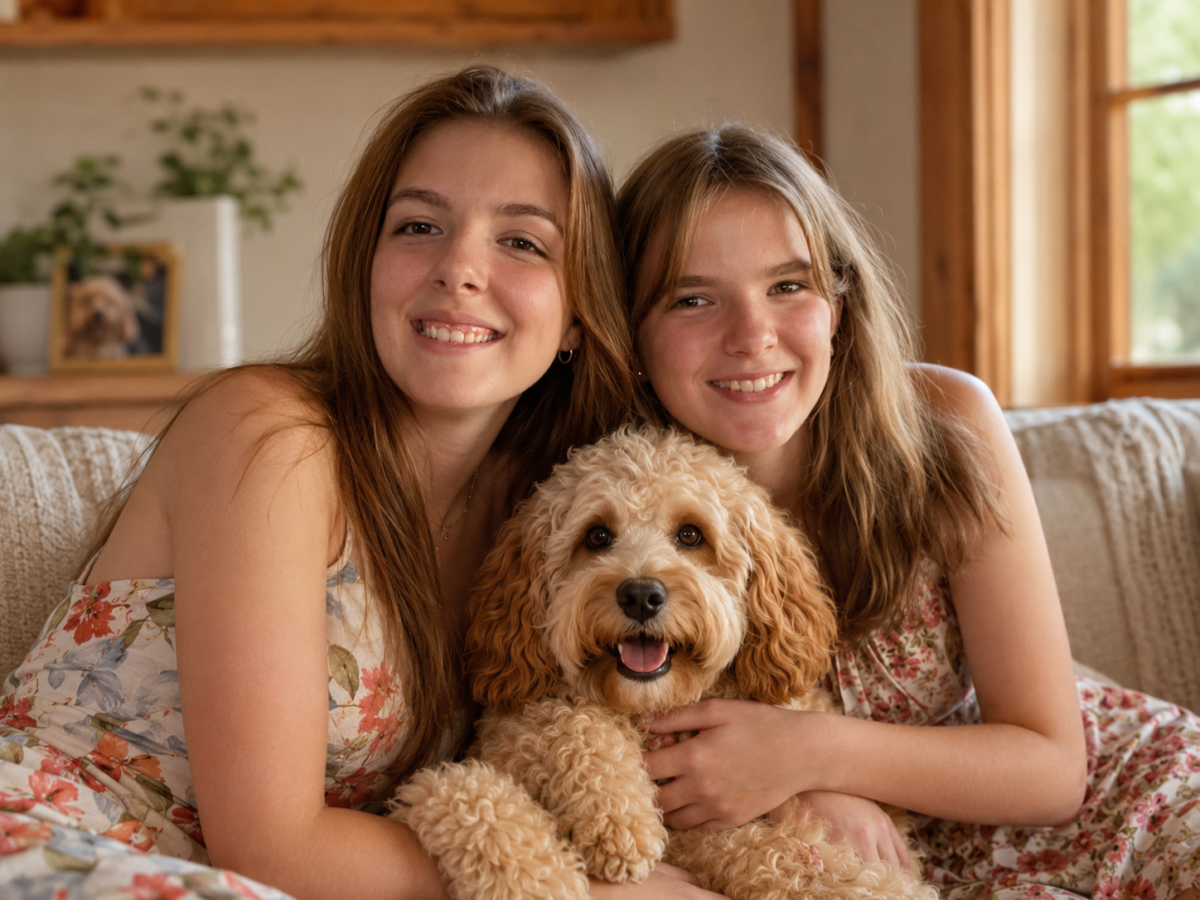
Because to a child, a pet is often so much more than “just an animal”. They may be a best friend, a playmate, a comfort at bedtime, a companion after school, or simply a much-loved part of everyday family life.
So this week’s blog is all about children and pet loss — how to talk to kids about saying goodbye, how to explain pet death to a child in a gentle and honest way, and how families can offer loving pet loss support for children when their hearts are hurting.
Why pet loss can feel so big for children
For many children, losing a pet is their first real experience of death and grief.
That can make children grieving a pet feel especially vulnerable, confused, and overwhelmed. They may not yet have the words to explain what they are feeling, and they may not fully understand what death means in the way adults do.
Some children cry a lot.
Some ask lots of questions.
Some become quiet.
Some seem to carry on playing, then suddenly become upset later.
All of that can be completely normal.
Children often move in and out of grief differently from adults. One moment they may be deeply sad, and the next they may be talking about something else entirely. That does not mean they did not love their pet. It simply means children process difficult feelings in smaller pieces.
How to explain pet death to a child
One of the hardest things for parents is knowing what words to use.
When thinking about how to explain pet death to a child, the kindest approach is usually to be gentle, clear, and honest.
Simple language is often best.
You might say something like:
“Their body was very poorly and it stopped working.”
“The vet could not make them better.”
“They died, which means they cannot come back, but we will always love them and remember them.”
Those words can feel very difficult to say, but they help children understand what has happened more clearly.
It is often better to avoid phrases like:
- gone to sleep
- passed away, without explanation
- we lost them
- they’ve gone away
These phrases are often said with love, but they can confuse children. A child may become frightened of sleep, worry about getting lost, or keep waiting for their pet to return home.
Using gentle but truthful language can help make a painful situation feel a little safer and easier to understand.
Helping kids with grief in an age-appropriate way
Helping kids with grief does not mean telling them everything in adult detail. It means giving them honest information in a way they can cope with.
You do not need to overwhelm them.
You do not need to explain every medical detail.
You do not need to have the perfect words.
Usually, children just need help understanding the basics:
- their pet was very poorly or very old
- they were not going to get better
- the kindest thing was to help them die peacefully, or to say goodbye after they had died
- they were loved very much
- none of this was the child’s fault
That last part matters a lot.
Children can sometimes blame themselves in ways adults do not expect. They may wonder if they caused it by being naughty, forgetting something, or not playing with their pet enough.
So part of pet loss support for children is gently reassuring them:
“This was not your fault.”
“You loved them, and they knew that.”
Should children be involved in saying goodbye?
There is no single right answer here.
Some children want to be involved. Some do not. Some may want to stroke their pet, draw them a picture, write them a note, or say goodbye in their own way. Others may prefer to remember them as they were.
What matters most is that children are given gentle choices where possible, without pressure.
If a pet is nearing the end of life, families may choose to let a child:
- spend quiet time with their pet
- say goodbye in their own words
- give them a favourite blanket or toy
- draw a picture
- write a letter
- place flowers nearby
- help choose a keepsake or memorial item
Some families also choose pet euthanasia at home, which can create a calmer, more familiar setting if children are going to be involved in any part of the goodbye. Home can feel quieter, less clinical, and more private, allowing children to say goodbye in a gentler environment.
Every child is different, and every family is too. There is no perfect script — only what feels most loving and manageable for your child.
How children may show grief
When it comes to children grieving a pet, sadness does not always look the way adults expect.
A child may:
- cry a lot
- seem angry or irritable
- ask the same questions again and again
- become clingy
- seem withdrawn
- struggle at bedtime
- act out at school or home
- want to talk about their pet constantly
- seem “fine” at first, then become upset days or weeks later
All of these can be part of grief.
Children often revisit loss in stages as they grow and understand more. A younger child may seem to accept it one day, then ask again the next where their pet is. This is not them forgetting. It is part of trying to make sense of something very big.
That is why helping kids with grief often means being patient with repeated questions, repeated feelings, and different emotions showing up at different times.
Let them remember in their own way
One of the most helpful things families can do is make space for remembrance.
For children, that might mean:
- making a memory box
- printing a paw print
- keeping a photo by the bed
- lighting a candle together
- planting flowers
- creating a scrapbook
- writing a letter to their pet
- talking about funny or happy memories
At Cherished Companion, Mum & Dad often see how meaningful keepsakes can be for families after pet loss, especially when children are involved. Something tangible — a paw print, a clipping of fur, a special photo, or a memorial item — can help a child feel connected and comforted.
These little acts can be a gentle part of pet loss support for children, helping children understand that although their pet has died, their love has not gone anywhere.
It is okay to let children see sadness
Sometimes adults worry they need to stay strong and hide all their feelings. But when children see grief handled gently, it can actually help them.
It shows them that sadness is normal.
It shows them that love and grief often sit side by side.
It shows them that crying is not wrong.
You do not need to be perfect.
You can simply say:
“I feel sad too because I loved them very much.”
That kind of honesty can help children feel less alone in their own feelings.
When a child asks difficult questions
Children can be beautifully honest, which means they may ask very direct questions, such as:
“Did it hurt?”
“Why couldn’t the vet fix them?”
“Are they coming back?”
“Where are they now?”
“Will you die too?”
These questions can catch grown-ups off guard, especially when emotions are already raw.
It is okay to pause.
It is okay to keep your answer simple.
It is okay to say, “That’s a really big question.”
If the pet was put to sleep because they were suffering, many families find it helpful to say something like:
“They were very poorly and the vet helped them die peacefully so they didn’t have to hurt anymore.”
That can be a gentle way of explaining pet death to a child while helping them understand that kindness was at the heart of the decision.
Pet loss support for children during and after goodbye
Families often think the hardest part is the moment of loss itself. But for children, grief can continue to show itself afterwards in quieter ways.
They may mention their pet unexpectedly.
They may become sad at bedtime.
They may struggle on birthdays, holidays, or when routines feel different.
That is why pet loss support for children should continue beyond the first few days.
Keep talking about the pet.
Say their name.
Share memories.
Let children know it is okay to still feel sad.
Sometimes the best support is not having the perfect words at all. It is simply being there, listening, and making space for whatever they feel.
Helping kids with grief while you are grieving too
This is the hard part, isn’t it?
Because parents are often trying to support a child while carrying their own heartbreak at the same time.
Please be gentle with yourselves too.
You do not have to have all the answers.
You do not have to do this perfectly.
You do not have to make grief neat and tidy.
If your child feels loved, heard, and reassured, that matters more than saying everything exactly right.
Fudge’s Final Thought 💭
If you are reading this because your family is facing a goodbye, and you are worried about children grieving a pet, please know this:
There is no perfect way to do this. 🐾
There is only love, honesty, reassurance, and being there for them.
When thinking about how to explain pet death to a child, the gentlest thing is often the simplest: tell the truth kindly, make space for their feelings, reassure them that it is not their fault, and help them remember their pet in a way that feels meaningful.
Whether you are looking for help with pet loss support for children, guidance on helping kids with grief, or support as your pet nears the end of life, Mum & Dad are here for families every step of the way.
And if your family is facing a goodbye, Mum & Dad can also help with gentle end of life support, pet euthanasia at home, and individual pet cremation afterwards — all handled with kindness, dignity, and care.
Because every pet deserves comfort.
Every child deserves gentle support.
And every goodbye deserves kindness.
After all…
EVERY PET DESERVES A CHERISHED FAREWELL. 🤍🐾